


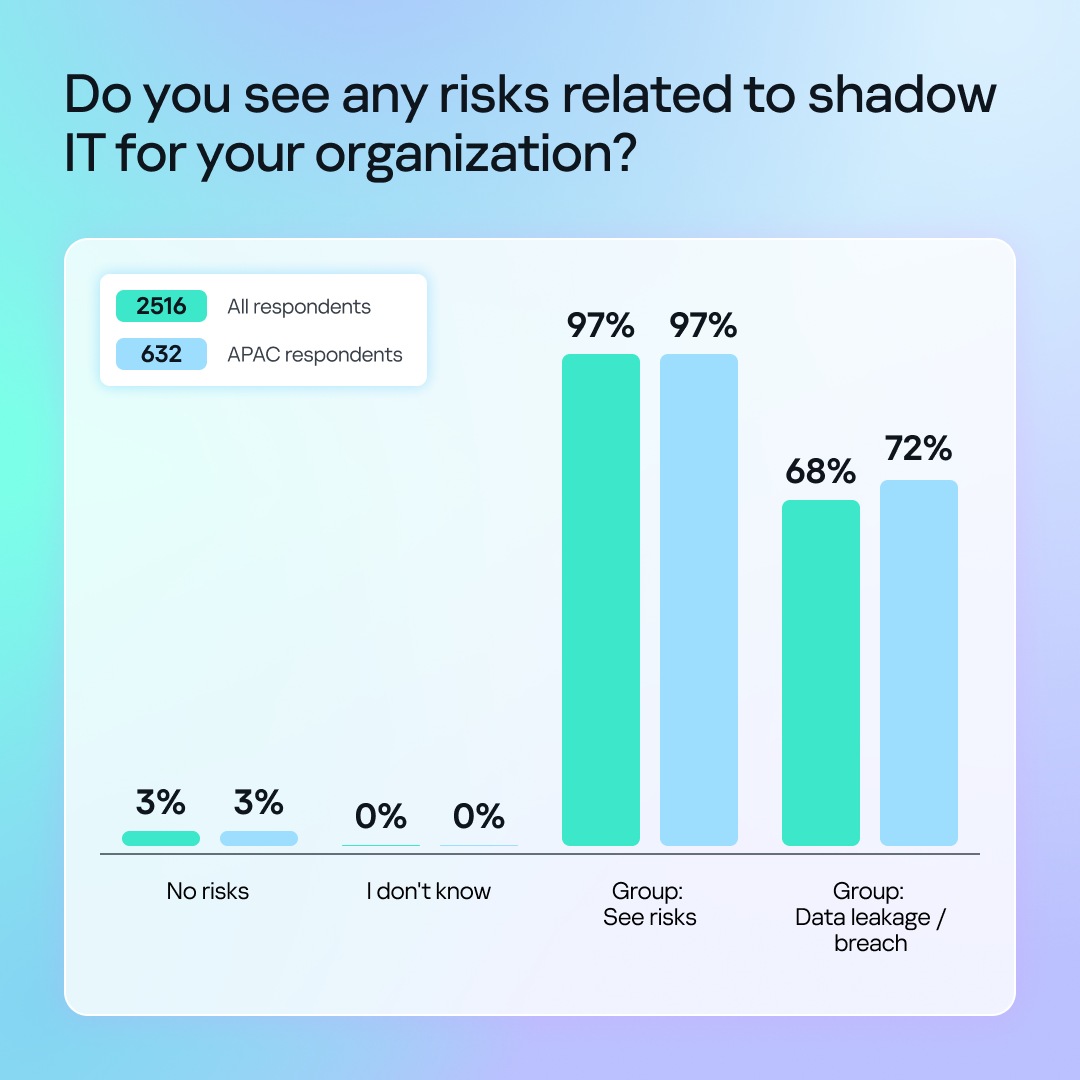
Small and mid-sized businesses (SMBs) in APAC are at an increased risk of becoming targets of cyber incidents due to the use of shadow IT by their employees amid the growing trend towards a distributed workforce. According to recent Kaspersky study, 97% of SMBs in APAC see risks related to Shadow IT, but less than half of them (44%) educated their employees about the risks.
Shadow IT is part of the company’s IT infrastructure that is oversight the scope of IT department. It refers to any software, hardware, cloud services, personal cloud storage, applications, or public AI tools used by employees for work. As Shadow IT is not being used in accordance with security policies, deploying and operating shadow IT can lead to serious outcomes for businesses.
According to the study, 73% of SMBs in APAC acknowledged that their employees used personal devices or programs for work, such as personal messengers (40%), personal laptops or devices (37%), and personal email accounts usage for business communications (36%). Remarkably, 39% of them said they used unapproved AI and generative AI tool for work purposes.

At the country level, the proportion of unapproved AI and generative AI tool usage differed widely. India recorded the highest rate at 47%, followed by Indonesia at 41%. Meanwhile, Vietnam (38%), China (37%), Thailand (36%), and Malaysia (33%) reported a slightly lower usage than regional average.
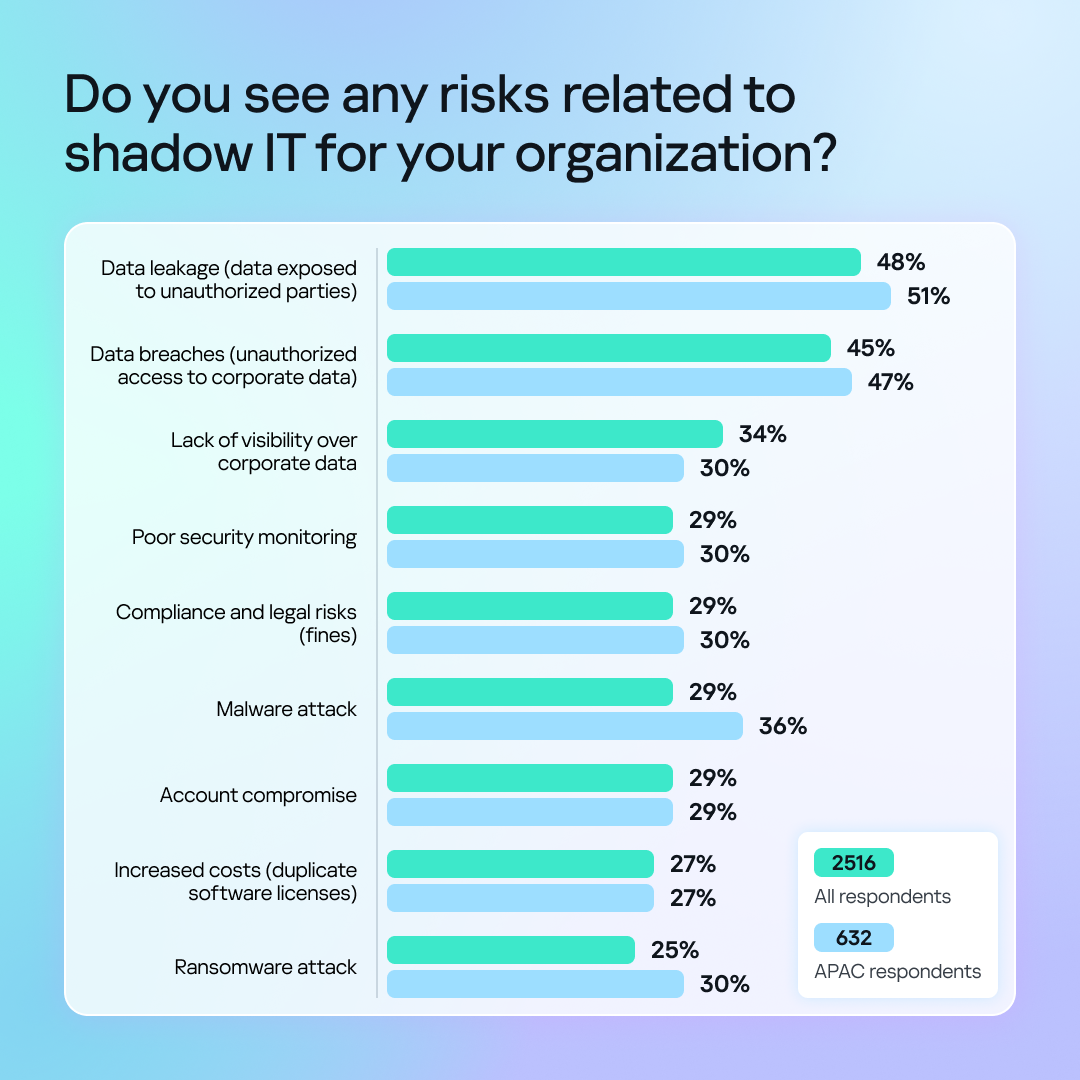
Top risks clearly reflected in the study. Most of SMBs in APAC showed concern about data security, including data leakage (51%), data breaches which means unauthorized access to corporate data (47%), and the lack of visibility over corporate data (30%).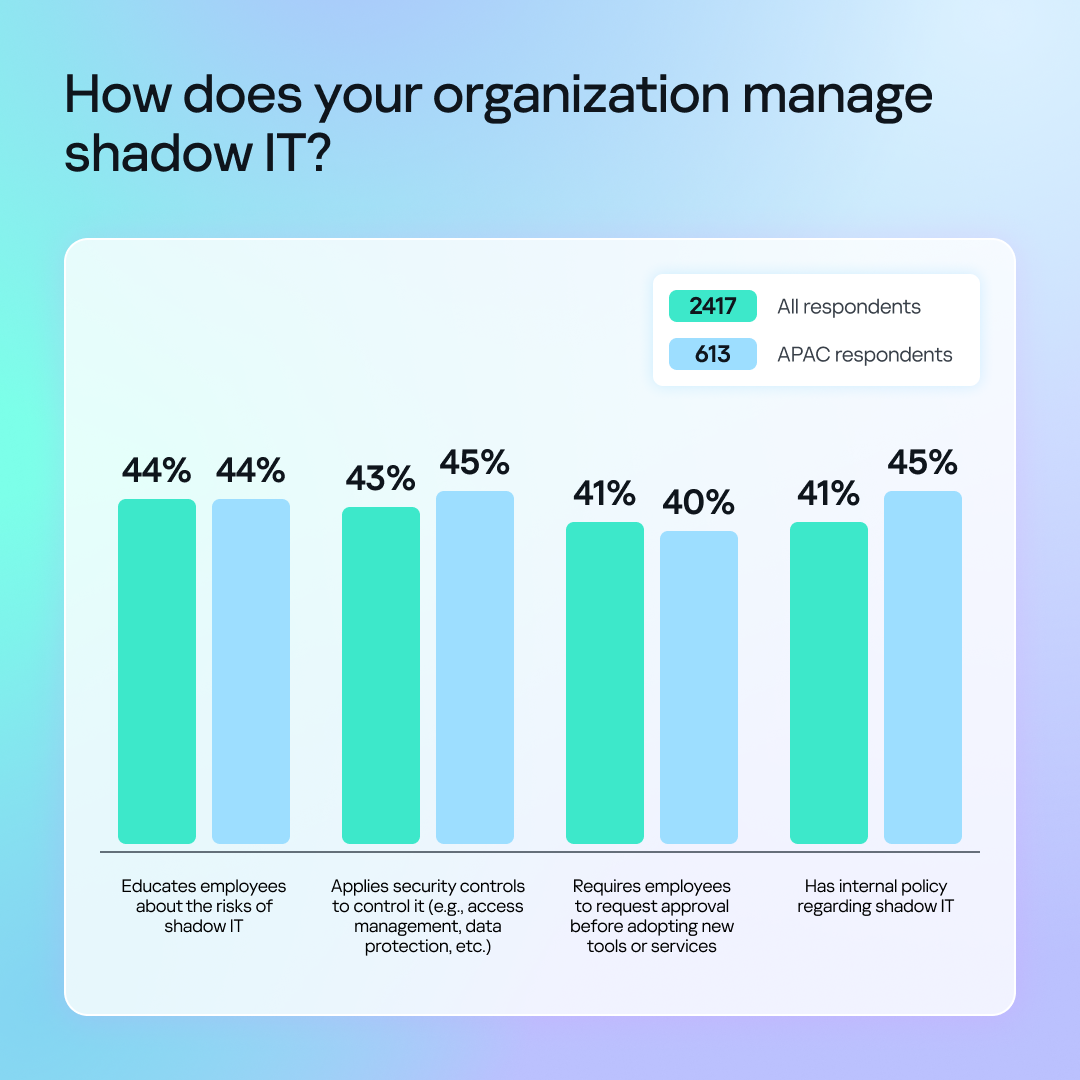
In addition, threats related to Shadow IT usage were seriously considered as the respondents also worried about malware attacks (36%) and ransomware attacks (30%).
Although most SMBs in APAC (98%) demonstrated measures to manage Shadow IT, such as applying security controls, conducting audits, and restricting unauthorised applications, the situation with the widespread usage remained a challenge by the fact that only 45% of them had internal policy in place. Additionally, the study revealed that only 44% educated their employees about Shadow IT.
Vietnam showed a significant focus on employee security awareness, with 41% of SMBs in the country reporting that they provide obligatory IT security training for their employees, compared to the regional average of 35%. China (38%), Indonesia (35%), and Malaysia (34%) also showed a commitment to employee training. Meanwhile, India and Thailand recorded the lowest rate at 31%.
“A lack of clear policies combined with untrained employees exposes companies to significant security risks. Managing Shadow IT requires an integrated strategy combining technology and human vigilance. Comprehensive cybersecurity solutions empower IT team to automatically detect, manage, and mitigate hidden threats across unapproved apps and devices,” says Adrian Hia, Managing Director for Asia Pacific at Kaspersky. “Alongside, regular employee training bridges the knowledge gap as it helps building strong cyber hygiene, reducing accidental data leaks, and ensuring that workforce agility does not come at the expense of company security.”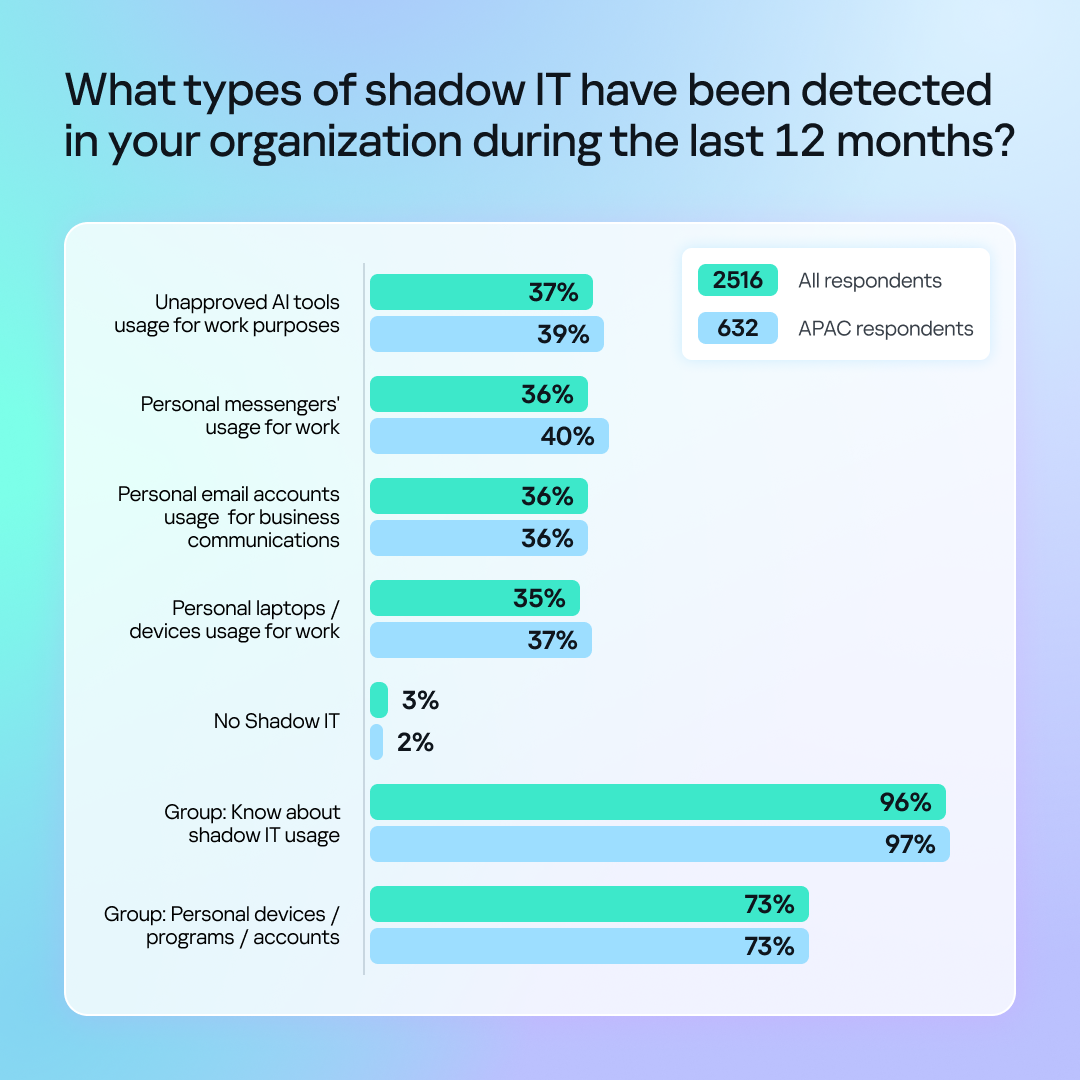
To mitigate the risks of using shadow IT in an organization, Kaspersky recommends: Ensure cooperation between the business and IT departments to regularly discuss new business needs, obtain feedback on the IT services used, in order to create new and improve existing IT services needed by the business. Regularly conduct an inventory of IT assets and scan your internal network to avoid the appearance of uncontrolled hardware and services. When it comes to personal employee devices, it’s best to give users as limited access as possible to only the resources they need to do their job. Use an access control system that will only allow authorized devices onto the network. Carry out training programs to improve the information security literacy of employees. To boost security awareness among employees, educate them with the Kaspersky Automated Security Awareness Platform training program, which teaches safe internet behavior. Invest in relevant training programs for IT security specialists. Kaspersky Cybersecurity for IT Online training helps build up simple yet effective IT security-related best practices and simple incident response scenarios for generalist IT admins, while Kaspersky Expert Training equips your security team with the latest knowledge and skills in threat management and mitigation. Use products and solutions that allow you to control the use of shadow IT within your organization. Kaspersky Endpoint Security for Business and Kaspersky Endpoint Security Cloud offer Application, Web and Device controls which limit the use of unsolicited apps, websites and peripherals, significantly reducing infection risks even in cases where employees use shadow IT or make mistakes due lack of cybersafe habits. Regularly conduct an inventory of IT assets to eliminate the appearance of abandoned devices and hardware. Organize a centralized process for publishing self-written solutions so that IT, so Information Security specialists learn about them in a timely manner. Limit the work of employees with third-party external services and if possible, block access to the most popular cloud information exchange resources.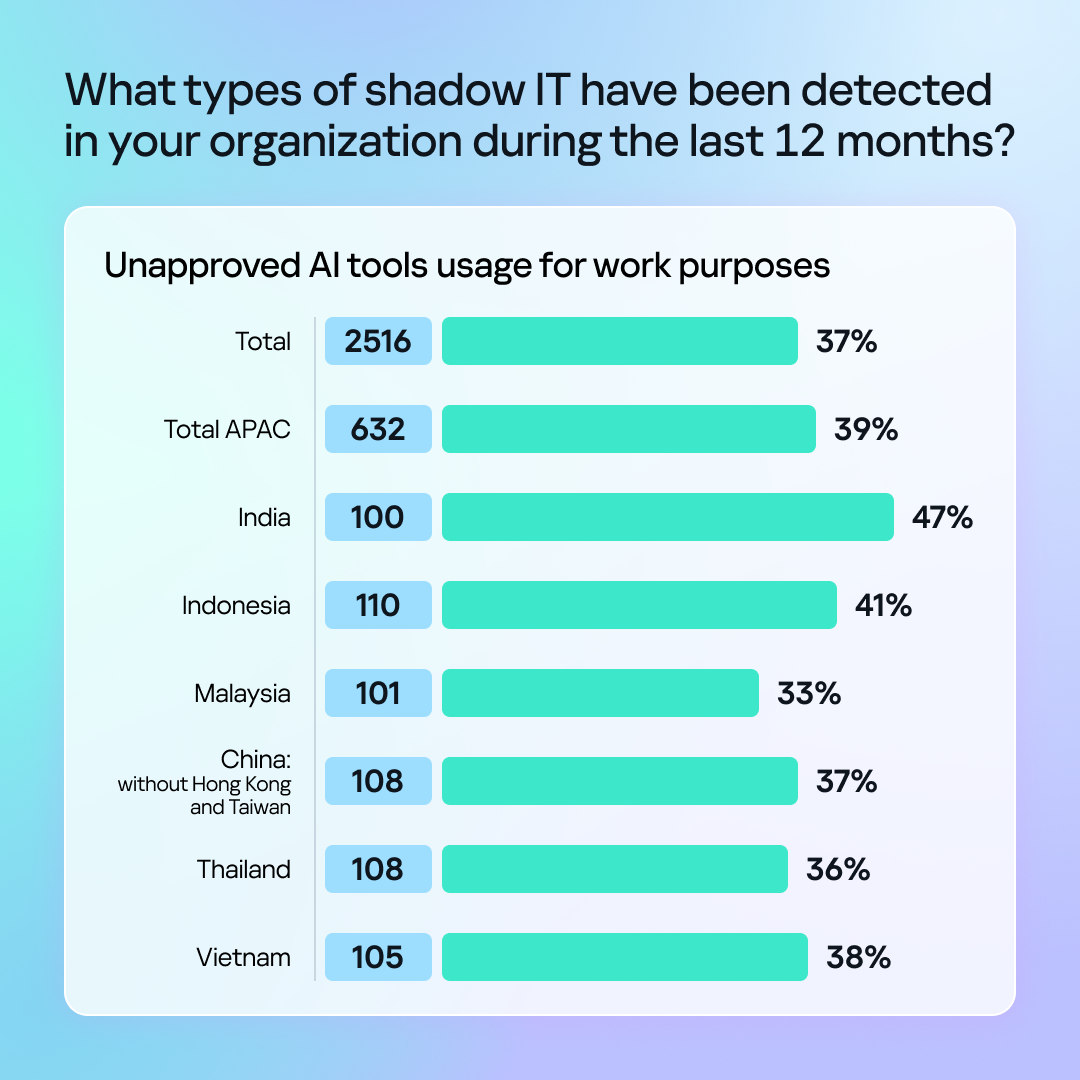
About the research
A study by Kaspersky’s internal research center involved 2,516 global interviews across 24 countries: Brazil, Mexico, Colombia, Argentina, Chile, Peru, France, Germany, Italy, Spain, Serbia, Greece, India, Indonesia, Malaysia, China, Thailand, Vietnam, Egypt, South Africa, Saudi Arabia, Turkey, UAE, Russia. Respondents’ specialization: IT specialists responsible for IT security (grade level: Senior specialist, Team leader / Manager, Head of department, Director, Vice-President) in companies with 50-499 employees.
Among the total sample, the APAC region was represented by 632 respondents.